Landmark: (703) 942-8404
By Alexandria Children's Dentistry | August 31, 2026
Some children walk into a dental office without a second thought. Others become overwhelmed by the sounds, sensations, unfamiliar equipment, or memories of a previous experience.
For those children, kid’s sedation dentistry in Alexandria may be considered as part of a carefully planned treatment approach.
Sedation is not something every child needs. It is a clinical decision made after considering the child’s medical history, anxiety level, age, treatment needs, and ability to cooperate safely.
What Is Pediatric Dental Sedation?
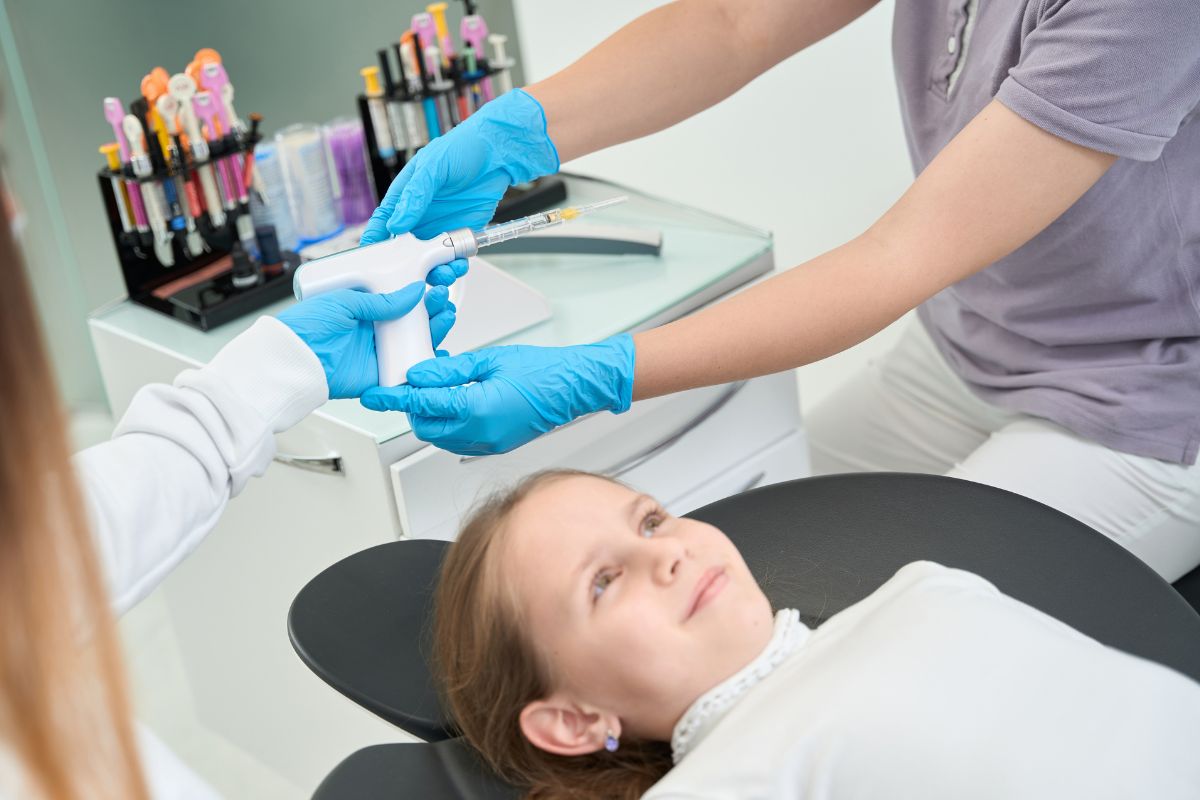
Dental sedation uses medication or anesthetic techniques to help a child remain calm and comfortable during dental treatment.
The goal isn’t simply to make a child “sleep through the dentist.”
Depending on the technique, sedation may reduce anxiety, increase comfort, improve cooperation, or allow necessary treatment to be completed safely.
Alexandria Children’s Dentistry offers nitrous oxide for appropriate patients and general anesthesia when clinically indicated, with treatment decisions made individually with parents.
Does Every Anxious Child Need Sedation?
No.
Many children can complete dental treatment with patient communication, reassurance, distraction, and a gradual introduction to the dental environment.
A child who is nervous about their first filling, for example, may simply need extra time and an explanation they can understand.
Sedation becomes a consideration when other approaches may not provide enough support for safe and comfortable care.
When Might Sedation Be Considered?
A pediatric dentist may consider additional support when a child:
- Has significant dental anxiety
- Has sensory sensitivities that make treatment difficult
- Has a strong gag reflex
- Is very young and unable to cooperate for necessary treatment
- Needs extensive dental treatment
- Has special healthcare needs that affect dental care
- Has had a previous traumatic dental experience
Alexandria Children’s Dentistry specifically notes that sedation may be considered for significant anxiety, sensory sensitivities, extensive treatment, and situations where comfort and safety cannot be adequately supported through other methods.
The important word is considered.
Sedation is not automatically the answer.
What Is Nitrous Oxide?
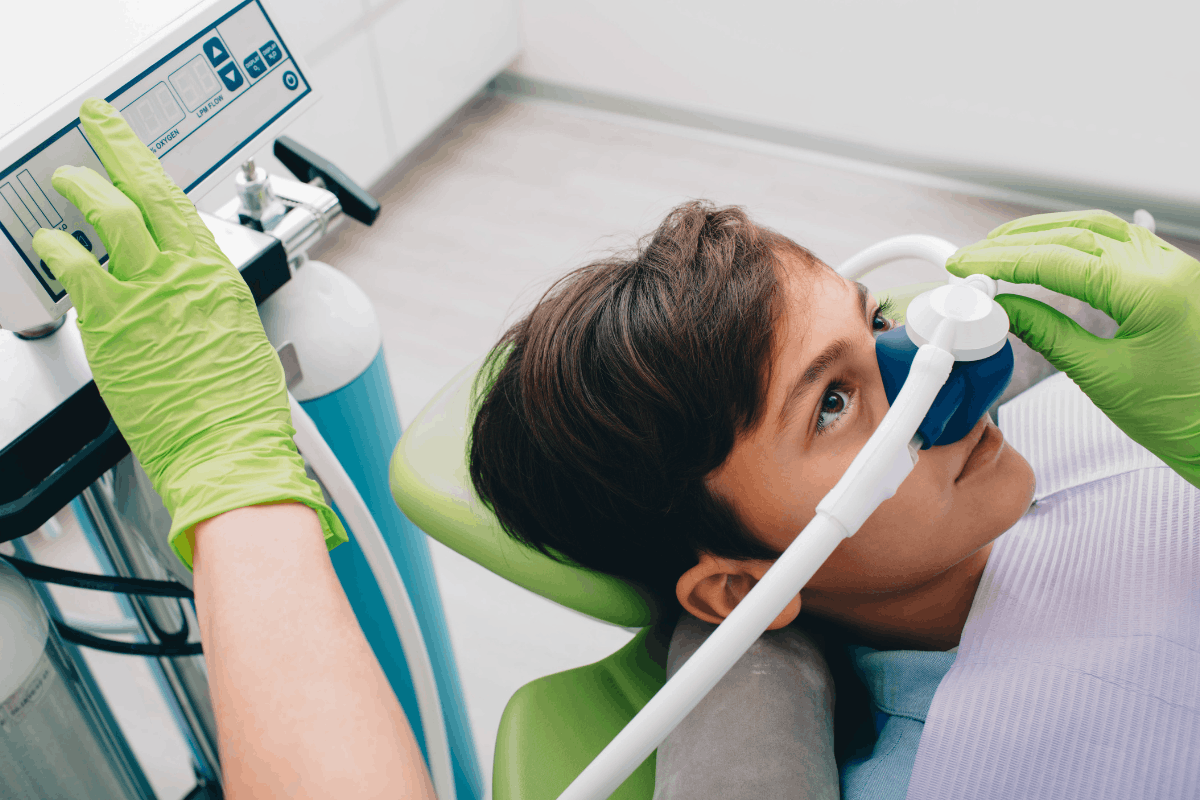
Nitrous oxide, commonly called laughing gas, is a mild sedation option used to help children relax during dental care.
A small mask is placed over the child’s nose. The child remains awake, responsive, and able to communicate while breathing the nitrous oxide and oxygen mixture.
At Alexandria Children’s Dentistry, nitrous oxide is described as an option for children experiencing anxiety, sensitivity to dental sensations, or a strong gag reflex.
For many children, this level of support is enough.
What Is General Anesthesia?
General anesthesia is a much deeper level of anesthesia.
When general anesthesia is recommended, the child is completely asleep during treatment and requires specialized anesthesia care.
It may be appropriate in selected cases involving very young children, significant anxiety, special healthcare needs, or extensive treatment needs.
Alexandria Children’s Dentistry states that general anesthesia is administered by board-certified pediatric anesthesiologists and may allow necessary treatment to be completed during one visit.
Because general anesthesia is substantially different from nitrous oxide, parents should expect a more detailed medical evaluation and specific preparation instructions.
How Do Dentists Decide Which Option Is Appropriate?
There is no one-size-fits-all sedation plan.
Before recommending sedation, the dental team should consider the child’s:
- Medical history
- Current medications
- Age and developmental level
- Dental treatment required
- Anxiety and previous dental experiences
- Ability to follow instructions
- Overall health and individual risk factors
Parents should have an opportunity to ask questions and understand why a particular option is being recommended.
At Alexandria Children’s Dentistry, sedation decisions are made individually and discussed with parents rather than treated as a routine part of pediatric dentistry.
How Can Parents Prepare a Child for Sedation Dentistry?
Preparation starts before the appointment.
First, follow all instructions provided by your dental and anesthesia team. Do not assume that eating, drinking, or taking medications is acceptable simply because your child normally does those things before dental visits.
Second, use calm and age-appropriate language.
You don’t need to explain every technical detail. Instead, tell your child that the dental team will help them stay comfortable while their teeth are being cared for.
Avoid making promises such as, “You won’t feel anything,” because children’s experiences vary.
What Should Parents Ask Before Treatment?
A consultation is a good time to ask practical questions.
Consider asking:
- Why is sedation being recommended?
- Are there alternatives?
- Which type of sedation is planned?
- Who will administer and monitor it?
- What preparation instructions should we follow?
- What should my child expect afterward?
- When can my child return to normal activities?
- What symptoms should prompt us to contact the dental team?
A reputable pediatric practice should welcome these questions.
What Happens After Sedation?
Recovery depends on the type of sedation used.
Children who receive nitrous oxide generally become alert quickly after the gas is discontinued. Alexandria Children’s Dentistry notes that the effects wear off rapidly and that most children can return to normal activities shortly afterward.
General anesthesia requires more extensive recovery planning and specific instructions from the dental and anesthesia teams.
Parents should follow the exact post-treatment guidance they receive rather than relying on general advice found online.
Is Sedation the Same as Pain Control?
Not exactly.
Sedation and pain management are related but different parts of dental care.
Sedation can reduce anxiety and help a child remain comfortable and cooperative. Depending on the dental procedure, the dentist may also use local anesthesia or other pain-control methods.
Your child’s dentist should explain what will be used and why.
A Comfortable Dental Experience Starts With the Right Plan
Parents sometimes feel guilty when their child needs sedation.
There is no reason to view it as a parenting failure or a sign that a child is “bad at the dentist.”
Children have different temperaments, sensory needs, developmental abilities, and medical circumstances. The goal is to provide appropriate care while protecting the child’s safety, comfort, and long-term relationship with dentistry.
For some children, gentle communication is enough. For others, sedation may provide the additional support needed to complete treatment safely.
Kid’s Sedation Dentistry in Alexandria
If your child is frightened of dental treatment or needs extensive care, start with a conversation rather than assuming sedation is necessary.
Alexandria Children’s Dentistry evaluates each child’s individual circumstances and offers both nitrous oxide and, when appropriate, general anesthesia with board-certified pediatric anesthesiologists.
Families can explore the practice’s Alexandria Children’s Dentistry services to learn more about sedation and other pediatric dental treatments.
If your child’s dental anxiety is preventing needed care, schedule a consultation and discuss your concerns with the pediatric dental team.
FAQs
What is kid’s sedation dentistry?
Kid’s sedation dentistry uses medication or anesthetic techniques to help a child remain calm, comfortable, and appropriately cooperative during dental treatment. The level of sedation depends on the child’s needs and the procedure.
Is nitrous oxide the same as being put to sleep?
No. With nitrous oxide, a child remains awake and responsive. It is a mild sedation option designed primarily to reduce anxiety and improve comfort.
When might a child need general anesthesia for dental treatment?
General anesthesia may be considered for very young children, children with significant anxiety or special healthcare needs, or children who require extensive treatment when other approaches are not appropriate.
Is sedation necessary for every child who is afraid of the dentist?
No. Many children can receive dental care using communication, reassurance, behavior guidance, and other comfort techniques. Sedation is considered when those approaches may not provide adequate safety or comfort.
Who administers general anesthesia at Alexandria Children’s Dentistry?
The practice states that it works with board-certified anesthesiologists who specialize in pediatric care when general anesthesia is used.
What should parents do before a sedation appointment?
Follow the dental and anesthesia team’s specific instructions regarding food, drinks, medications, arrival time, and transportation. Instructions can vary depending on the type of sedation.